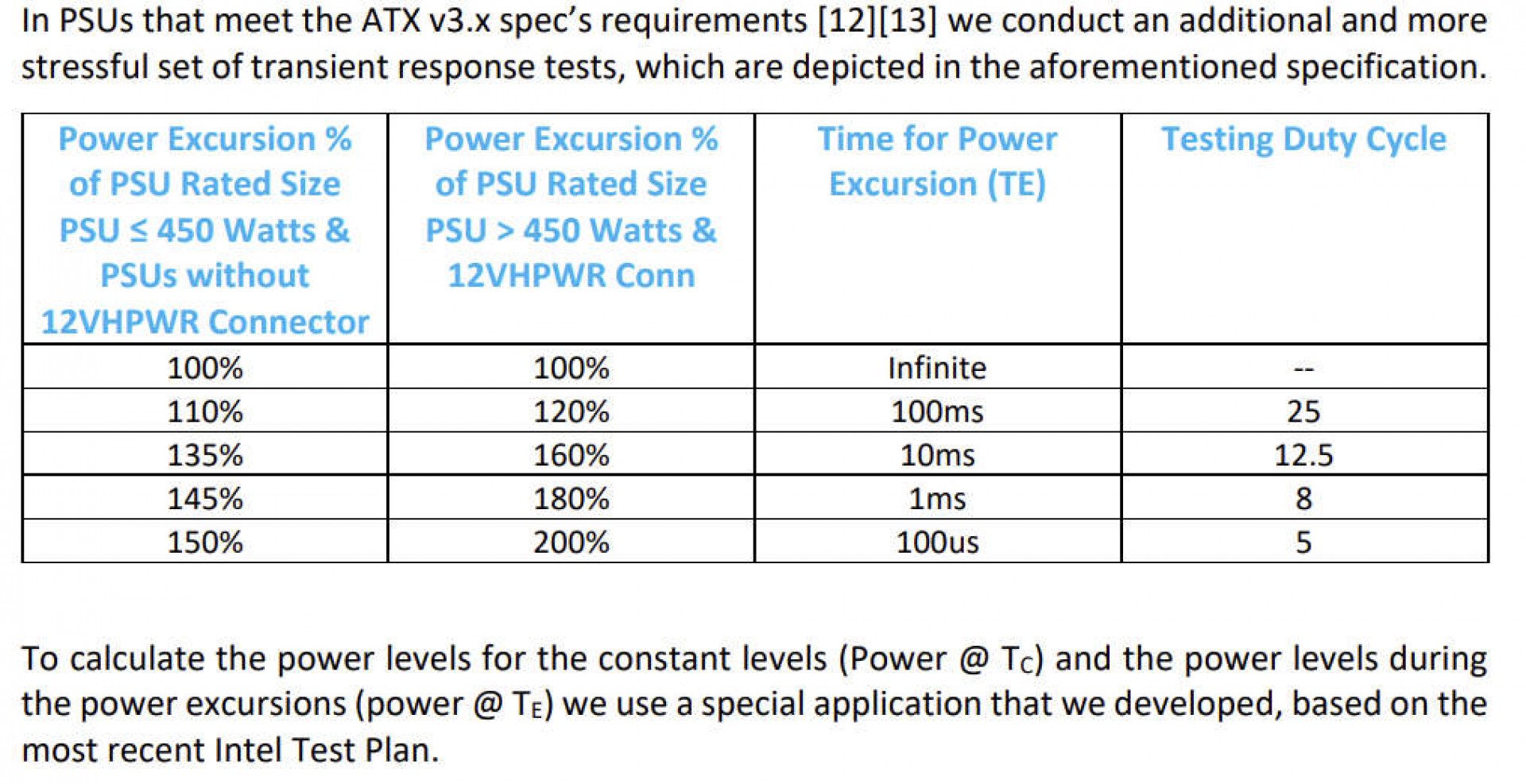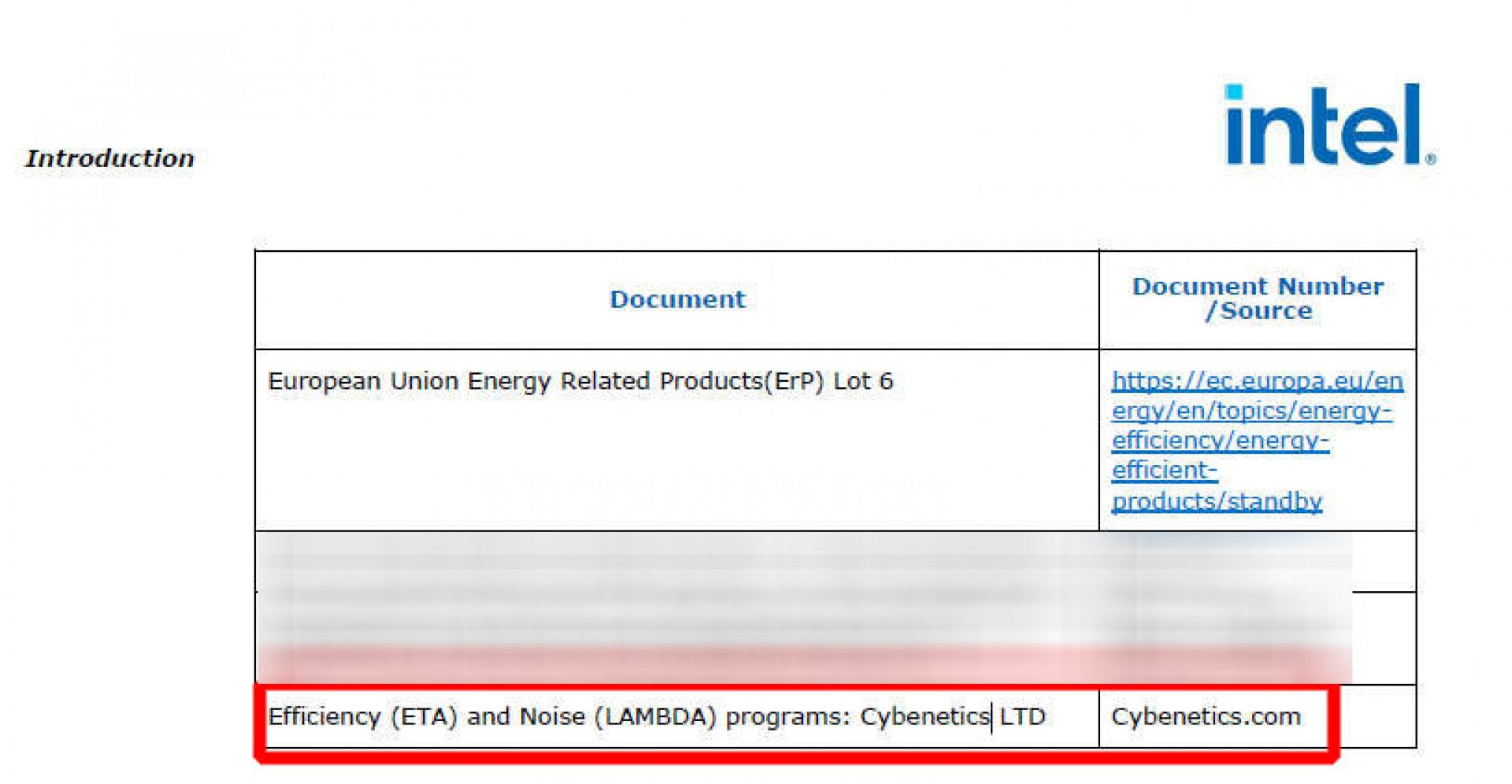



Cybenetics is officially recognized by Intel, starting from the ATX v3.0 specification. This is one reason that Cybenetics has been pushed to run even more tests on each PSU that it certifies to check if it meets all the requirements of the ATX v3.0 and ATX v3.1 specs, including the transient response tests (or PSU Power Excursions, as the ATX spec calls them), which can reach up to 200% of the PSU’s max power for PSUs over 450W with the 12+4 pin connector (up to 150% for the other PSUs).
Cybenetics conducts many tests to check for ATX v3.x compliance, including PSU timings, DC Power Sequence, efficiency at 2% load, inrush currents, load regulation, ripple suppression, turn-on overshoot, and more. Generally, if the PSU doesn’t meet the ATX v3.x requirements, it doesn’t get an ATX v3.x Pass badge. The most challenging requirement so far proved to be the transient response tests.
What decides the ATX v3.x Pass badge
A PSU gets the ATX v3.1 Pass badge when it meets the ATX v3.1 requirements that we measure, and the ATX v3.0 Pass badge when it meets the ATX v3.0 ones. The two versions differ on hold-up time, so a PSU can pass ATX v3.1 but not ATX v3.0. This is what we check:
For the moment, conducted EMI emissions do not decide the ATX v3.x Pass badge, to give brands some room to improve in this area. We still measure them and report the results to the manufacturer.
PSUs that passed
The PSU database lists every PSU that holds the badge, so these lists are always up to date: